
“If I don’t work, my family doesn’t eat—but some days, I feel too tired inside to keep going.”
Seventeen-year-old Asha works at a construction site on the outskirts of a city. Her day begins with household chores, followed by long hours of manual labour. She left school due to financial constraints. When asked how she feels, she says she is “just tired.” What remains unspoken is that this tiredness is not only physical, but emotional and persistent. Like many others, she has never been given the language to describe it.
There’s a certain kind of silence around girls like Asha. It is not the silence, it’s the silence of being asked, “How are you, really?” This is where the mental health conversation needs to start.
Two critical questions emerge.
When survival crowds out adolescence, what happens to mental health
Distress is ever-present but remains invisible
Across India, mental health discussions are growing, though mostly in urban areas. Girls who do labour or unpaid work are missing. According to International Labour Organization figures in India, over 10 million children are involved in labour — the majority being girls working in unorganized sectors. When survival is primary, emotional development stops, and distress is more continuous than episodic.
Another vital protective factor, education, gets stripped away. According to UNICEF, girls from the poorest households are as much as three times more likely to be out of school. No school, no access to peer support and structure and expression — that leads to more isolation.
In such contexts, distress rarely presents in clinical forms. It manifests as fatigue, body pain, withdrawal or irritability, often accepted as everyday hardship. National Institute of Mental Health and Neuroscience has shown that undiagnosed mental health problems are not uncommon, particularly in lower resource settings. Sadness goes unnoticeable because it is internalized and less spoken.
This burden is compounded by family stress. It is a common source of conflict, which girls bear the brunt of in terms of emotional well-being. On one hand, traditional gender expectation requires them to be an economic contributor whilst being obedient (lessened autonomy and voice).
These realities are continued to be shaped by early marriage. Almost 23 percent of women between ages 20 and 24 were married before age 18, according to the National Family Health Survey. Such transitions frequently entail greater responsibility and isolation rather than stability.
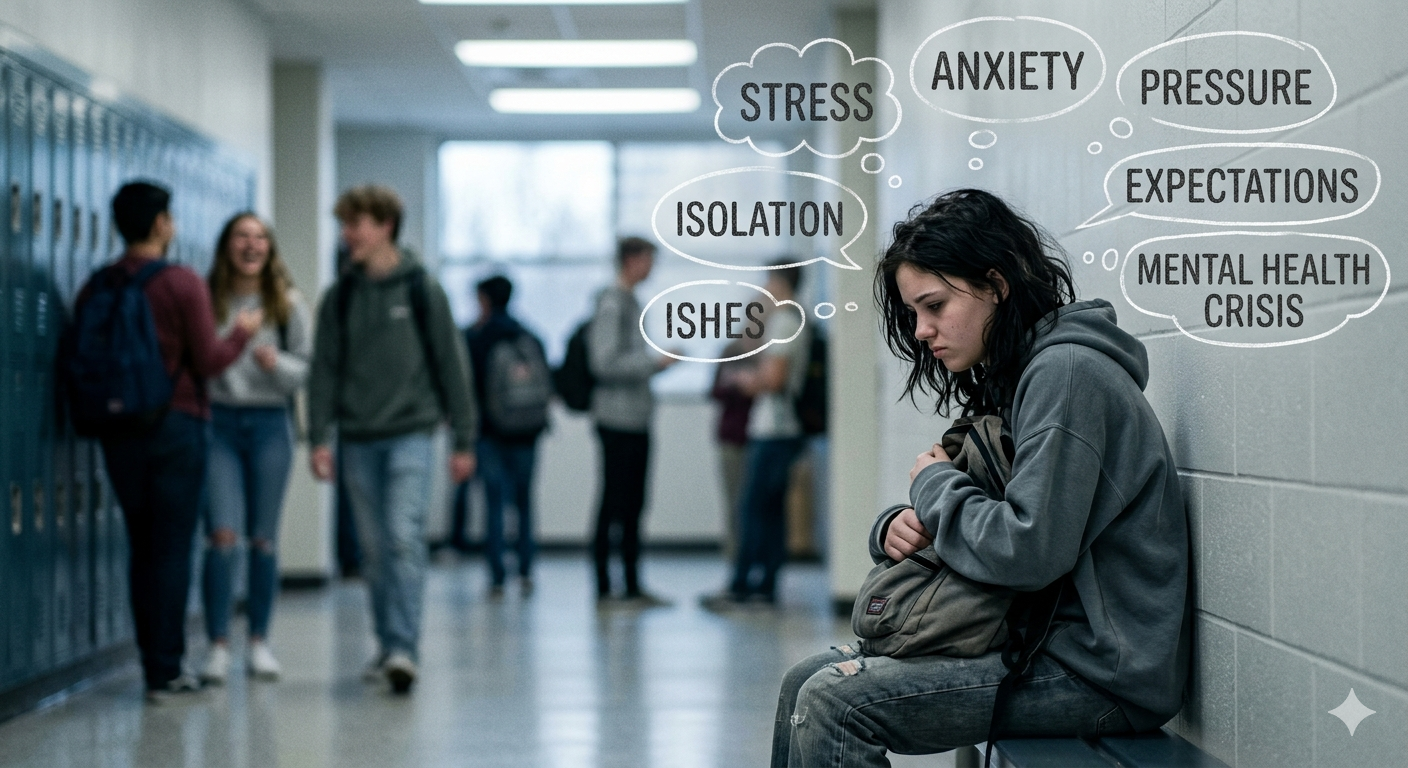
Mental health here is much more than diagnosable disorders. It’s a slow erosion — a normalization of stress, diminished aspirations and diluted self. If there are no opportunities outside, the inner world adjusts to that.
Access to mental health care is still very limited, and the World Health Organization has highlighted major gaps. Services are remote and stigma remains. Girls are resilient, but resilience is no substitute for care.
Solving this means taking mental health into communities first — schools, grassroots programs and local systems. Providing education, skills and economic opportunities is not just policy work — it’s mental health work.
At its core, this is about dignity. These girls are already going through more than [they] should.” It is no longer an optional step to recognize their mental health as valuable and even equal, in importance to survival.
References
International Labour Organization. (2021). Child labour global estimates 2020 trends and the road forward. International Labour Office.
UNICEF. (2021). The state of the world’s children 2021 on my mind promoting protecting and caring for children’s mental health. UNICEF.
UNESCO. (2020). Global education monitoring report inclusion and education all means all. UNESCO.
National Institute of Mental Health and Neurosciences. (2016). National mental health survey of India 2015 to 2016. Ministry of Health and Family Welfare Government of India.
World Health Organization. (2021). Adolescent mental health. World Health Organization.
United Nations Population Fund. (2020). Adolescent girls in India status and challenges. UNFPA India.
National Family Health Survey. (2021). National family health survey NFHS 5 2019 to 2021 India report. Ministry of Health and Family Welfare Government of India.
World Bank. (2018). World development report learning to realize education’s promise. World Bank.